Stay in the know
From Theory to Practice: How Our Stewardship Finance Workshop Is Transforming Water Conversations Across South Africa
At Water Footprint Implementation, our work has focused on translating water footprint concepts into practical actions. One approach we employ is the water footprint compensation concept, where organisations offset the unavoidable part of their water footprint by investing in local stewardship projects. Our Compensation Platform links compensators seeking to reduce their impact with project owners who are restoring local water resources. The capital they provide funds for real work and generates measurable credits in return.
But repeated discussions with businesses and project developers revealed a deeper challenge. The distance between understanding water stewardship and actually carrying it out is vast. That gap erodes basin resilience, limits community benefits and weakens corporate commitments. We needed a way to bridge the gap between theory and practice. This led us to create the “Stewardship Finance: A Simulation Workshop.”
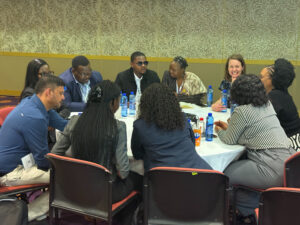
The workshop is not a lecture. It is a live negotiation that immerses participants in a realistic dealmaking process. Each group assumes the role of a compensator or a project developer. They receive authentic basin information, science-based targets, and practical budget constraints. They must then negotiate agreements covering payment structures, community involvement, monitoring and verification, and risk sharing.
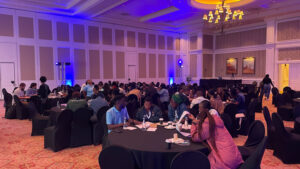
We first tested the workshop, organised together with the Water Research Commission, at the AWSISA 2025 Global South Dialogue in Johannesburg on 10 November 2025. The format broke from convention. Participants were assigned to two fictional companies: Mogale Platinum Operations in the Crocodile West and Southern Sun Beverages in the Berg River, and matched with two fictional projects: a smallholder irrigation efficiency initiative and an aquifer-recharge and green-infrastructure programme. Four teams had ninety minutes to navigate the scenario and either reach an agreement or walk away.
The negotiations started immediately. Mogale Platinum’s team discussed whether to invest 7.5 million Rand over three years and how often they should review progress. The irrigation project team suggested a large upfront payment to secure equipment, but they were concerned it might scare away the investor. A participant representing a traditional leader insisted that the community must have a say on the steering committee. Another, portraying a woman farmer, argued that employment targets should reflect the actual demographics of the cooperative.
None of this was scripted. These were the same social, financial and governance tensions that influence real stewardship agreements.
The turning point came halfway through. Southern Sun Beverages and the Berg River project had reached an impasse. The company preferred a straightforward payment-for-results contract. The project depended on municipal involvement. They were about to give up when someone proposed a three-party agreement. That idea shifted the entire conversation. In resolving their own deadlock, they had created a blended finance structure without formal instruction. This is precisely what the workshop aims to unlock.
We conducted a second session at the WISA Young Water Professionals Conference in Gqeberha on 27 November 2025. This group was younger and less constrained by corporate norms. One compensator team considered splitting their credit purchases between two projects to achieve more cost-effective results while maintaining social and hydrological benefits. Participants posed questions about who benefits from surplus credits, how gender targets should be established, and what happens to infrastructure after the funding period. These are the challenging questions that often go unasked.
After multiple sessions, five lessons have become clear.
- Community engagement consistently becomes the hardest point. Participants confront the realities of consent, representation and distribution of benefits. These are the reasons real projects succeed or fail.
- Financial creativity grows under constraint. Each workshop produces new ideas, such as milestone-based payments linked to satisfaction surveys or community ownership of credits.
- Monitoring becomes central rather than peripheral. Teams debate sampling strategies, equipment costs and reporting frequency. They begin to understand that verification is the basis of trust.
- People learn complexity through doing, not listening. Short introductions followed by immediate engagement result in deeper understanding than long presentations.
- Participants want to make this real. After every workshop, several people ask how to apply the approach in their own organisations. The simulation makes implementation seem possible, not theoretical.
The workshop’s success is measured less in applause than in outcomes. Over forty practitioners have taken contract templates; some have already sought support to turn workshop deals into live projects. More importantly, we notice a shift in perspective: stewardship is moving from charity or token CSR to operational risk management. Companies are starting to see that basin collapse is a business risk, and that compensation – structured and verified – is not generosity but self-interest properly aligned with community resilience.
Pedagogically, the workshop relies on experiential learning design: concrete experience, reflective observation, abstraction of principles and active experimentation back in practice. Emotion matters; participants remember the frustration of stalled deals and the relief of creative breakthroughs far more readily than any slide deck.
We plan to scale up. Next steps include public workshops, customised in-house sessions for companies, and university collaborations to integrate the simulation into curricula. However, scaling is not an end in itself; it serves a practical goal: securing more signed contracts, increasing verified CAPs, and encouraging more basins to move towards balance.
If you work in water stewardship and feel stuck between intention and implementation, you are not alone. We created a space where the future is negotiated, and where theory is tested, challenged, and improved.
Come, let’s get unstuck together.